
RESPIGHI AND CREITH - CAMBRIDGE PHILHARMONIC
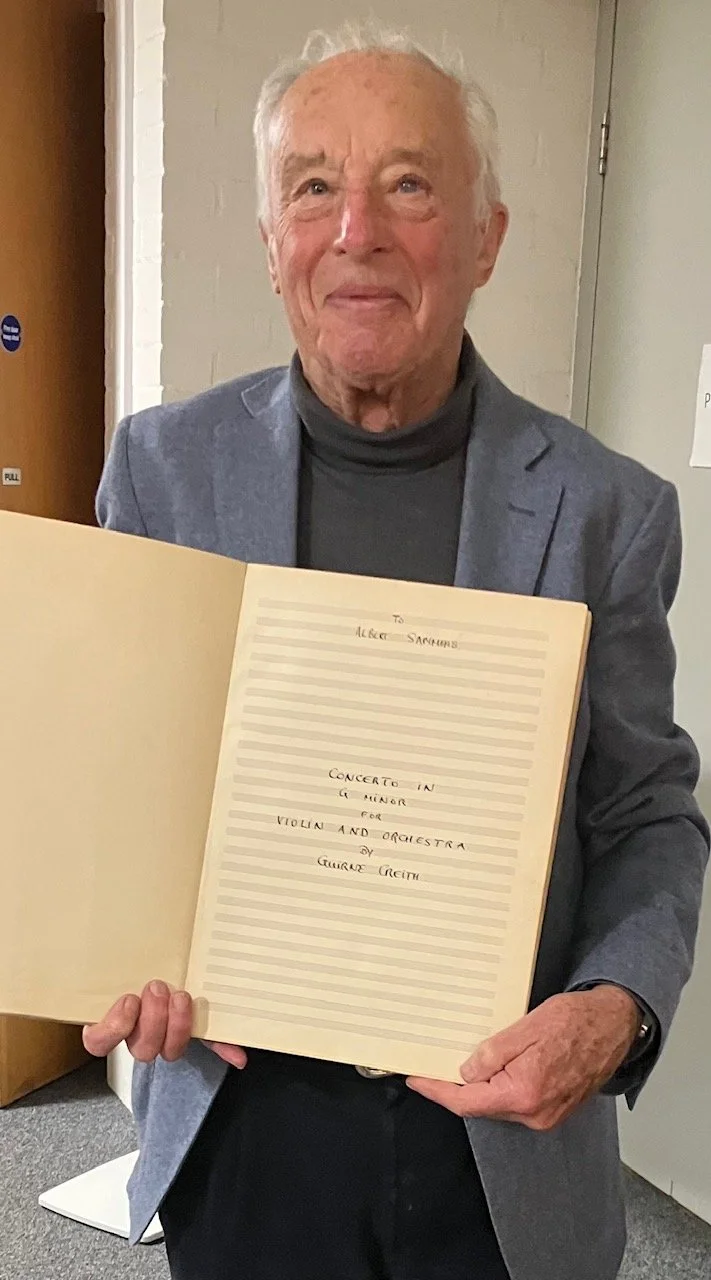
GUIRNE CREITH’S SON ROBIN WITH THE SCORE OF THE LOST VIOLIN CONCERTO FOUND IN A SECOND HAND PIANO SHOP. PHOTO: MIKE LEVY
It was fireworks night at West Road. No, not the ‘light the blue touch paper’ variety but there were plenty of pyrotechnics in that concert auditorium. Cambridge Philharmonic never do things by half, and the programme was outstandingly ambitious. The first half, the violin concerto by Guirne Creith. Who? What? No shame in never having heard of this British composer who died in 1996. She and her story are variations on an enigma. Writing her concerto, and many other pieces in the 1930s, she has been almost totally forgotten. But there are many mysteries – Creith was not her real name (she was born Gladys Cohen), most of her works are lost and her two sons never knew she composed music. Indeed, the score of the Violin Concerto was found not that long ago in a second-hand piano shop. How it got there? Another mystery.
What was definitely not a mystery was the quality and power of her concerto. In what is only the third performance of this work, the large audience in Cambridge must, like me, having fallen for this lush, lovely, and exciting work. Soloist Freya Goldmark produced a beautifully balanced sound throughout the three movements of this fine work. Turning its back on arid serialism on the up in the pre-war scene, it had all the hallmarks of a late Romantic piece. Great sweeping melodies, luscious orchestrations, fiery interludes, and catchy melodies. There were hints of Elgar, Sibelius and Ravel but the voice was definitely her own. Harry Sever led the band never overpowering the soloist and helping to make his orchestra sound totally professional. After the finale warmly and genuinely cheered by the audience, on to the stage came Creith’s two sons, one of whom, Robin Hunter-Coddington, had brought a copy of the score remarkably found in that shop. Amazing that it should be our very own Phill that brought this great work to our aural attention.
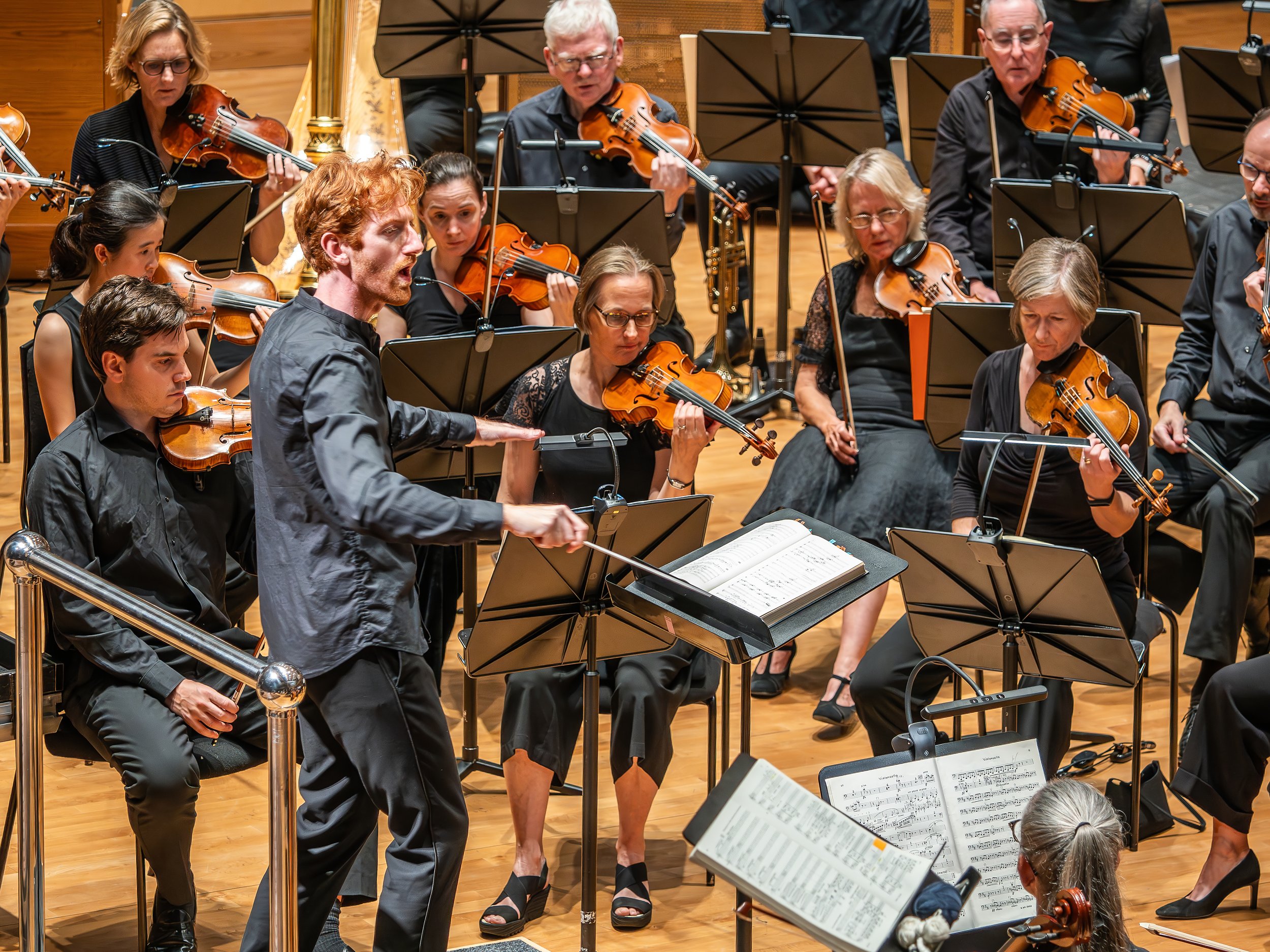
HARRY SEVER CONDUCTING THE CAMBRIDGE PHIL. PHOTO: BILL HISKETT
The second half was no less ambitious and it was here that the true fireworks began. They came with Respighi’s ‘Roman Trilogy’ – essentially three standalone pieces performed here together. ‘Pines of Rome’, ‘Fountains of Rome’ and ‘Roman Festivals’ require a huge orchestra equipped with exceptional players led by a conductor with a sense of wizardry. Luckily for us, the Cambridge Phi all three bills. They were in top form. Respighi’s orchestrations are thrilling and 100 years on, sounding as fresh as a musical daisy: bells, mandolin, offstage trumpets, recording of birdsong, harps, and even a football rattle. The music is joyous, sensuous, thrilling and at times ear-splitting. Respighi’s musical palette is rich in colour, texture and Roman audacity. There was one movement depicting a march of ancients along the Appian Way that was sent goosebumps down the neck such was the power of the writing and execution. The loudest bits of the Roman Festivals suite must have been heard in Midsummer Common, who needs bonfire night when the November night was lit with such wonderful music performed by this outstanding orchestra?
Look out for the Cambridge Philharmonic’s next concert: L’enfance du Christ by Berlioz 20 December at 4 pm
https://cambridgephilharmonic.com/whats-on/berlioz-lenfance-du-christ/