
CURLEW RIVER - BENJAMIN BRITTEN
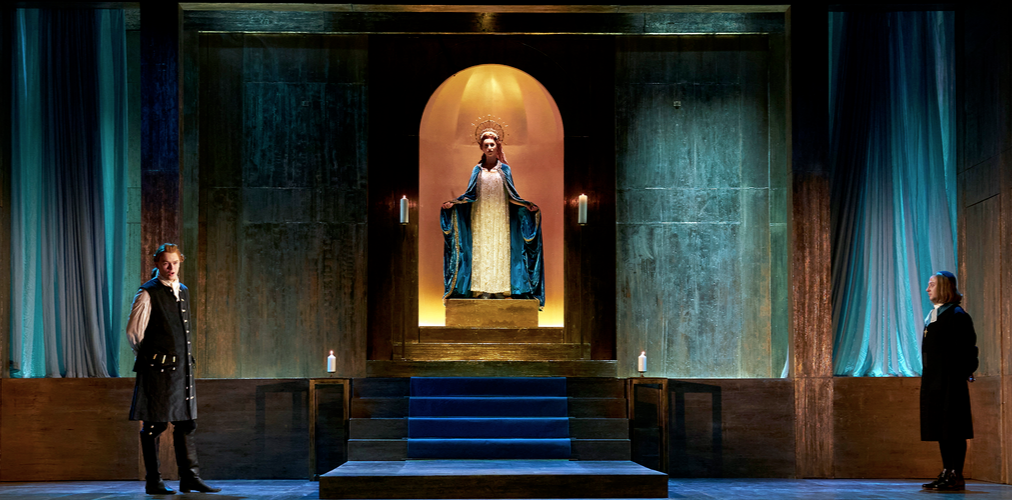
The call of the curlew is haunting, a penetrating swoop of sound redolent of the remote waterlands of East Anglia. Who better to capture the sound world of this wading wonder than Benjamin Britten, the Suffolk genius? But the curly-beaked bird is not the subject of his one-act opera or ‘church parable’. His librettist William Plomer worked with the composer in the early 1960s to create their own version of a Japanese noh play. What they created was a simple but powerfully tragic story of a mother’s search for her lost son. Called ‘The Madwoman’, she has travelled from her home in the Black Mountains to the fenlands in search of her 12 year-old son who disappeared a year before. She encounters a strange ferryman who will row her across the eponymous Curlew River, and a strange traveller with a notebook. Add to the mix a band of monks who begin the opera with a beautiful plainsong chant. They become a chorus echoing the increasingly heartbreaking narrative as the mother finds that her son has met a fatal end.

BEN JOHNSON
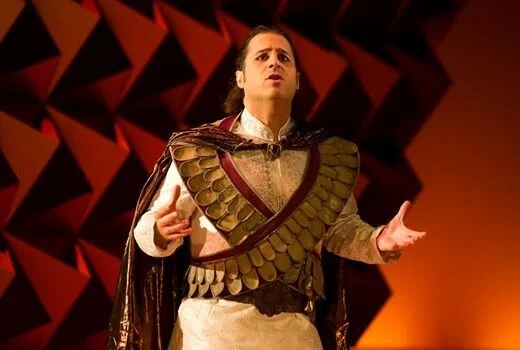
The production, part of Cambridge Summer Music, must have won many new friends for this spare and modernist piece – this is late(ish) Britten, a far cry from the melodic Peter Grimes. But it packs a hefty punch especially as the level of performance by singers and chamber orchestra was first rate. Ben Johnson (who also directed the staged version) was outstanding as the Madwoman – his powerful tenor filling the cavernous spaces of Jesus College Chapel. Armand Rabot almost stole the show as the ferryman. He had immense power in his bass baritone and brought a nuanced reading to the role – even the odd flash of cynical humour in this largely dark and unsettling opera. Oliver Bowes also brought the character of the sympathetic traveller to life – powerfully sung and delicately portrayed.
Tom Primrose led a most wonderful band. Britten’s orchestration was, and is, so fresh and aurally exciting. Drums, organ, harp, viola, double bass, horn and flute painted a truly Brittenesque world of swirling aural colours – imagine a musical Lucien Fraud; thick textures mingled with wisps of sound , fragments of distant harmonies. There are strong echoes here of ‘Turn of the Screw’ and ‘Owen Wingrave’ – add a dash of the composer’s ‘Serenade for Tenor Horn and Strings’ though here the mood is much darker.
Though Ben Johnson’s slightly silly wig and mask added nothing to the madwoman’s portrayal, his very presence and that soaring and sorrowful voice could not but fail to move. As ‘she’ discovers that her son had been enslaved and had died of neglect and buried there by the river, there was an almost unbearable sense of tragedy. As the monks processed out as they had arrived, and the sounds of ensemble in the transept faded, there was a palpable feeling of sadness and loss in the room. Though I had never seen this work before, I cannot imagine a better performance – or one, like the curlew, so haunting.

ARMAND RABOT