
Ion - the Greek Play
Ion – Greek tragedy with a sting in its tail
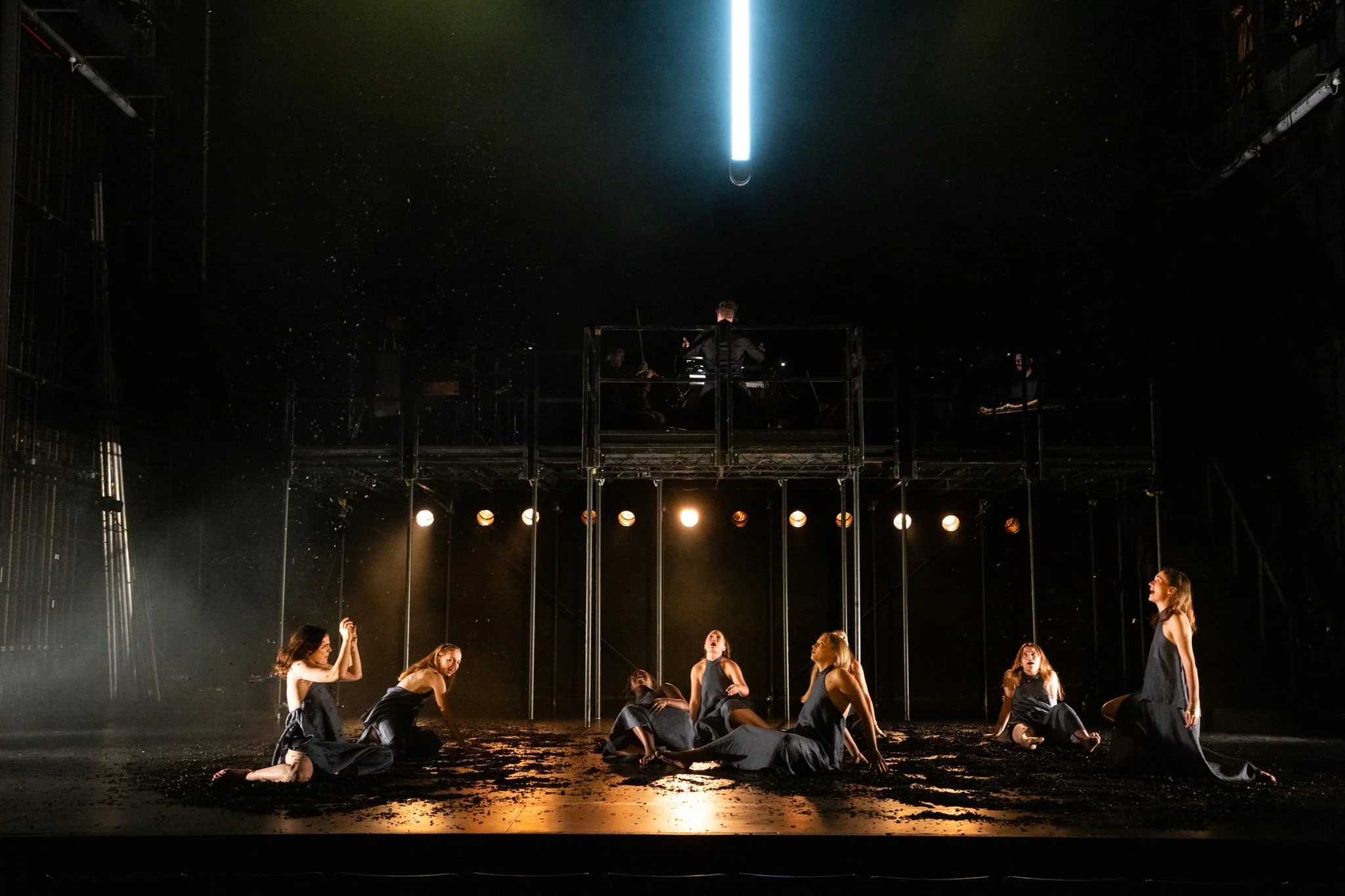
The Cambridge Greek Play, Arts Theatre, Cambridge
The triennial Cambridge Greek Play is back in town with a new production of Ion. This seldom-performed play by Euripides deserves more outings. It is a powerful, heart-wrenching story of a mother’s search for her lost son, of divine cruelty and human suffering, and of a family reunited against seemingly impossible odds.
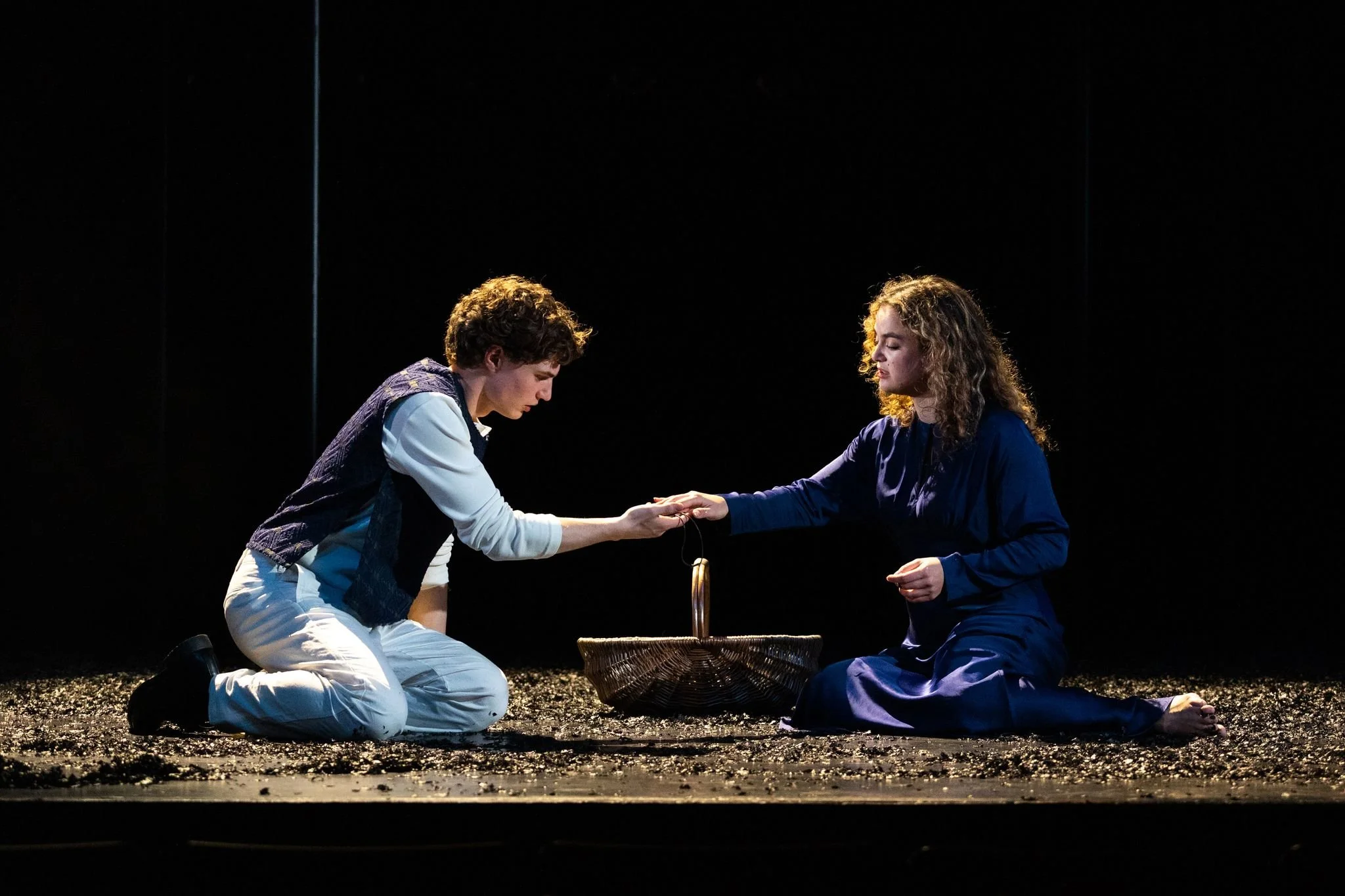
Creusa, daughter of the King of Athens, has been raped by the god Apollo and secretly given birth to his child. In despair, she abandons the baby in a cave, believing him lost for ever. But the child has been rescued and brought up at Apollo’s temple in Delphi, where he has grown into a young man named Ion, entirely ignorant of his parentage.
Years later, Creusa arrives at Delphi with her husband Xuthus, desperate for a child. An oracle declares that Xuthus already has a son, and he embraces Ion as his own. For Creusa, the news is devastating. Believing that her husband has fathered a child by another woman, she plots to murder the young man, unaware that he is the very son she has spent years mourning. From this cruel misunderstanding Euripides builds a drama of jealousy, threatened murder and, finally, recognition.
This student production had some wonderful high spots but also some bewildering shortcomings – or should I say longcomings?
At its best, the production delivered the kernel of the drama with tremendous oratorical force. The play was performed in ancient Greek, with surtitles (thank the gods), and the language, far from being a barrier, added to the sense of ritual and emotional intensity. It was also beautiful to hear.
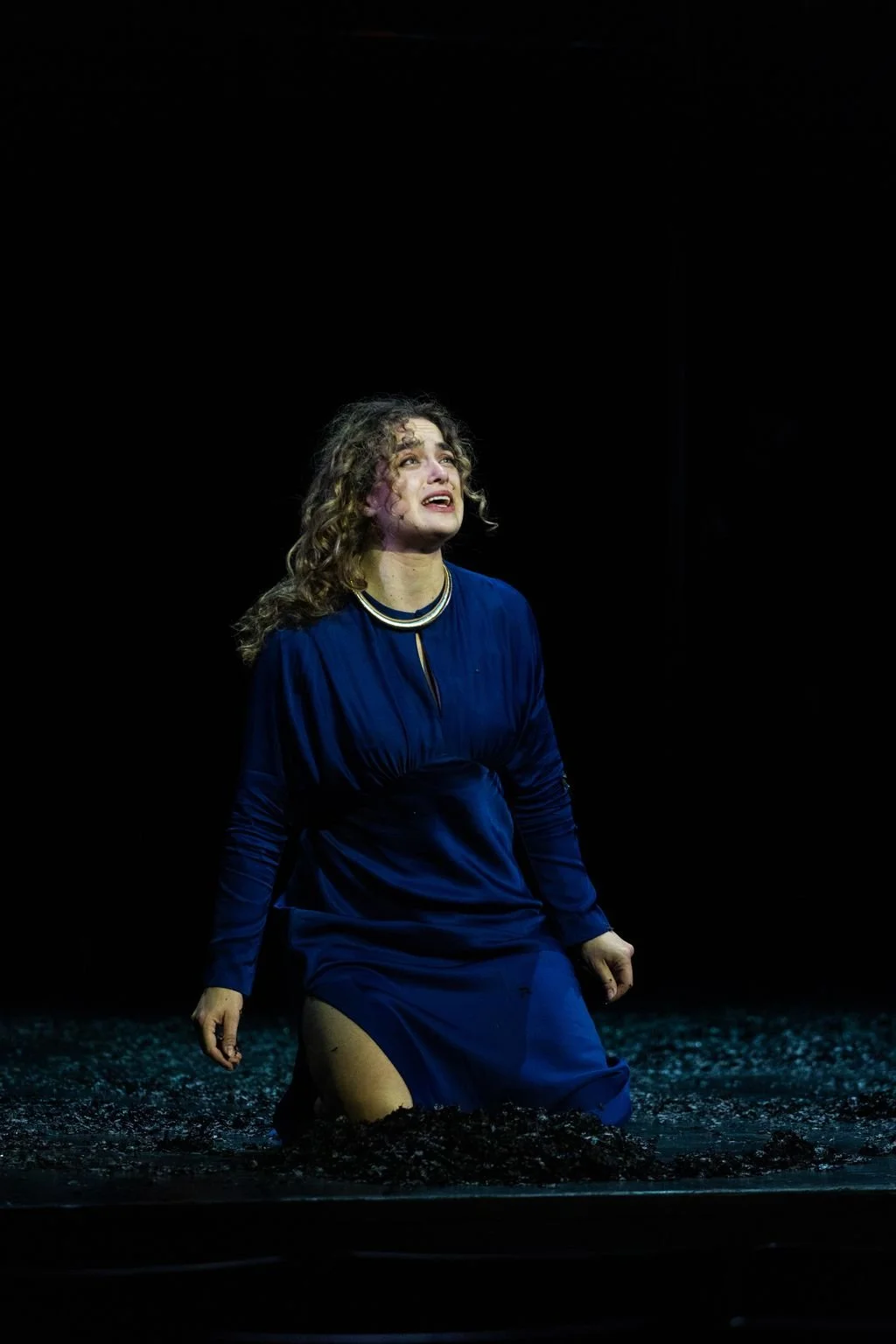
Dylan Hughes, as Ion, commanded the stage with his boyish energy, youthful innocence and bursts of tragic anger. Iris Tadié was gripping as Creusa, a woman tormented by the memory of Apollo’s assault and the loss of her child. Their scenes together, particularly as the truth begins to emerge, brought the evening’s most compelling moments.
Rosalind Parker’s direction made imaginative use of a lithe, athletic chorus, whose intricate movements and physical energy created some striking stage pictures. Richard Causton’s intriguing musical score, performed by an onstage ensemble under musical director Elliott Park, provided tinkles, cracks, percussive surprises and plucked-string accompaniments that transported us from Market Hill to ancient Delphi.
Philip Burke’s lighting was eerily powerful, with shards of light piercing the darkness and illuminating the temple of Apollo, where the action unfolds. The combination of light, movement and music could be hypnotic. But there were two elements that rather spoiled the Delphic party.
The first was the pacing. The play seemed to take an age to get going, with extended musical passages and rather too much prancing by the chorus before the drama was allowed to gather momentum. What was initially intriguing became repetitive, and there were moments when the theatrical effects threatened to overwhelm the storytelling. That, however, was a minor complaint compared with the ending.
Unusually for a Greek tragedy, Ion concludes not with a pile of corpses but with reconciliation. Mother and son discover their true relationship; Creusa’s husband is incorporated into the new family arrangement; and the goddess Athena arrives to explain what the future holds. After so much anguish, we have the prospect of a new beginning.
It should have been an immensely moving conclusion. And, for a few moments, it was. But Parker apparently couldn’t bear to let us go. Instead, we were treated to an extended unaccompanied choral passage which seemed to last ten or fifteen minutes. It felt interminable. You could sense the audience beginning to shift in their seats.
And still we hadn’t finished. The cast returned in jeans and T-shirts for what looked suspiciously like a Zorba the Greek routine. All very jolly, and no doubt great fun for the company, but by then the emotional intensity of the mother-son reunion had evaporated.
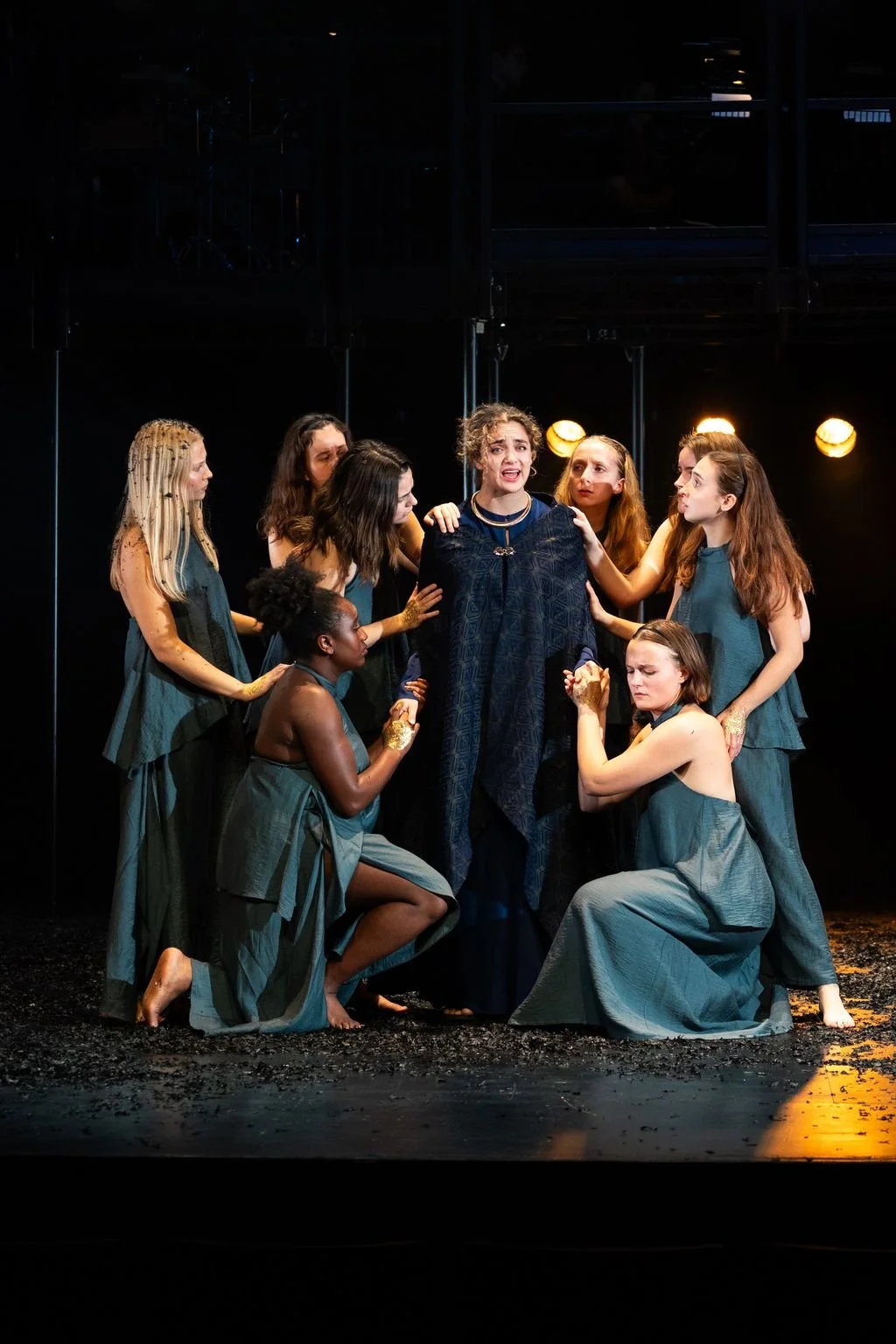
The programme reveals that this was no accidental overrun. The company had commissioned a setting of a Homeric Hymn to the Mother of the Gods specifically to provide a new conclusion: a celebration of the reunion and a release from the emotional tension of the drama. It was a perfectly understandable artistic intention. But for this spectator, the effect was quite the opposite. Instead of deepening the moment, it dissipated its power.
There is, of course, a long tradition of song and dance in Greek theatre, and the chorus had an important part to play in bringing a drama to its close. But that is not quite the same as tacking an extended celebratory finale onto a play whose emotional resolution has already been achieved.
This was a production of considerable talent, imagination and ambition, with some outstanding performances and moments of genuine theatrical beauty. It reminded us why Euripides’ Ion deserves to be better known. What a pity that, having found its dramatic destination, the production seemed so reluctant to leave it. Still the evening was definitely worth seeing and I for one, look forward to the next one in 2029.
Photos - Credit Ian Olsson