I LOVE BOOSTERS
Written by Eve Waldron
There are films that ask us to identify with their heroes, films that want us to despise their villains, and then there is I Love Booster, which would prefer that we stop worrying about such things and simply enjoy the ride. This is easier than it sounds. Booster, after all, is a thief, although the word seems almost pedestrian for someone who approaches shoplifting with such determined concentration and considerably better clothes.
The man responsible for all this craziness is Boots Riley, who is both writer and director. The musician turned filmmaker’s first feature, Sorry to Bother You, established his taste for surreal comedy with a distinctly anti-capitalist bite. Riley has said that he wants his films to work as visceral experiences rather than follow conventional rules of pacing, which may explain why I Love Booster feels increasingly as though it has no intention of slowing down. It’s mixture of fashion, politics, comedy and outright absurdity is unmistakably his. The result is exhilarating, hugely inventive and rather exhausting—which may be precisely what Riley intended.
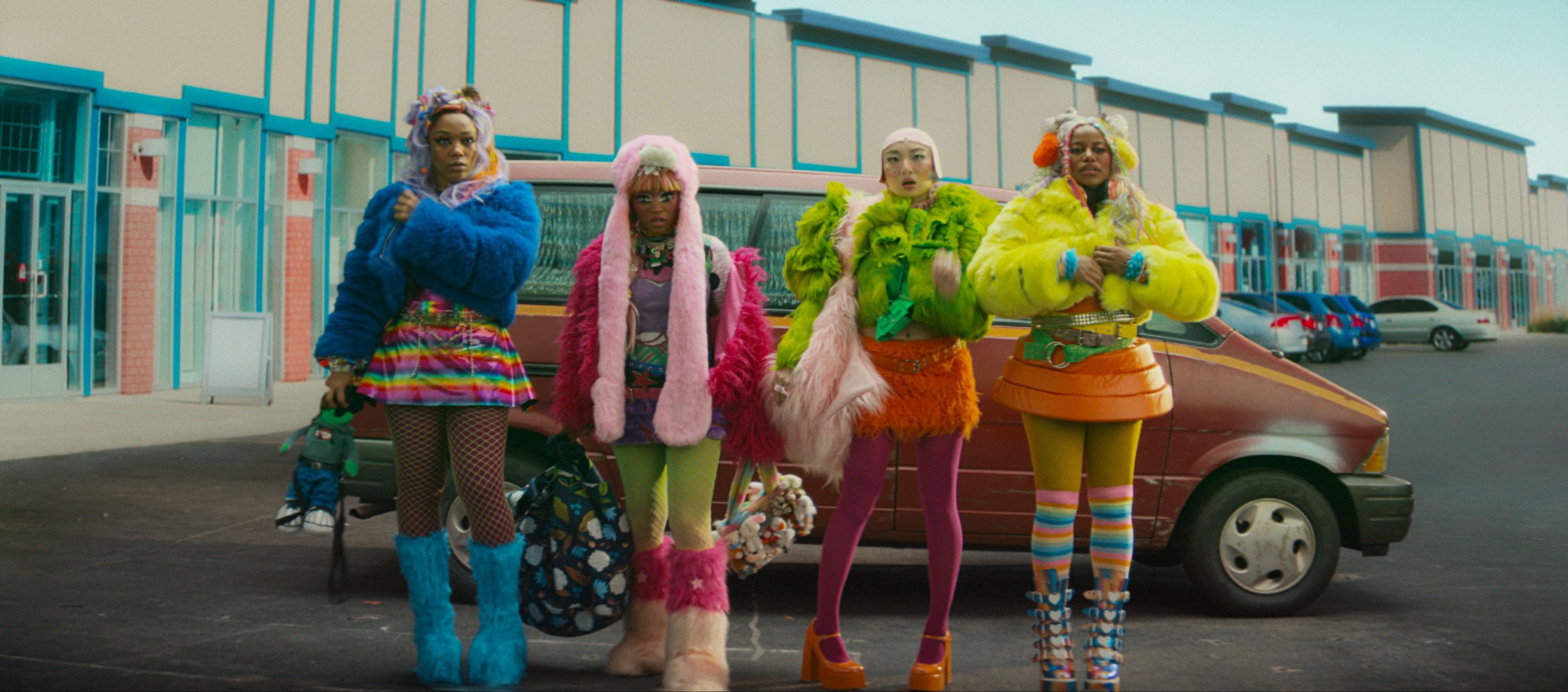
From the start, the film’s graphics and music let us know we are in for a very fun ride. I loved the 1970s-style typography; it is witty, bold and slightly louche, establishing a world in which style is not decoration but part of the joke. The musical score does much the same. It drives the film forward with such infectious rhythm that even Booster’s more questionable activities acquire an irresistible swagger.
The film moves through the world of high-end retail with an appreciative eye. Clothes are not merely things to be worn but objects of desire, status and fantasy. The shops gleam; the merchandise waits in colour coordinated aisles; and Booster regards the whole arrangement less as commerce than as a challenge. Why should all this loveliness remain on one side of the counter?
We also see the other side of the system, the Chinese factories with employees working overtime with no pay and dying due to the sandblasting of denim, all treated with his same quirky style. Perhaps we will all think a bit harder about throw away fashion.
What saves I Love Booster from becoming merely an exercise in glorifying crime is its humour. There is something wonderfully absurd about the seriousness with which luxury goods are treated, both by those who sell them and those determined to acquire them without the tiresome intervention of a credit card. Booster herself has the confidence of someone who has concluded that ordinary rules were designed for ordinary people.
The pacy tempo of the film hardly ever stops to draw breath. What begins as exhilarating does becomes somewhat exhausting. Scenes tumble into one another, the score pushes us along and each escapade seems obliged to be more outrageous than the last. Towards the end, the film is no longer merely racing; it is hurtling downhill like a ball of credit card receipts which often appear out of nowhere.
Perhaps that excess is the point. Fashion itself promises transformation: put on the right coat, carry the right bag and you can become the person you imagine yourself to be. Booster simply takes the proposition to its logical—and illegal—conclusion. She understands that appearance is a form of currency, and she knows how to spend it.
I Love Booster is stylish, funny, exuberant and cheerfully disreputable. Its fabulous visuals and terrific score give it an energy that is hard to resist. By the end, the film has become almost as outrageous as its heroine. I left entertained, slightly breathless and pleased I had seen this film like no other.
The film is on again on Tuesday evening October 27th at the Cambridge Art’s Picturehouse.