
MEDEA - AT THE ADC
‘Hell hath no fury like a woman scorned’ — the famous misquotation from Congreve might well have been coined for Medea. Euripides’ fifth-century BCE tragedy is an unflinching study of revenge, culminating in the most horrifying act imaginable: a mother murdering her own children. Medea, a foreigner trapped in Corinth, has been cast aside by her husband Jason, who is preparing to marry the daughter of King Creon. Branded a ‘barbarian’, isolated and powerless in an alien land, how can she wound the vainglorious Jason most deeply? By destroying the very future he prizes: their two young sons.
There is no spoiler here. From the opening moments, the production projects the details of the coming murders across the stage in multiple languages. This is not a drama about suspense, but about inevitability. The question is not what Medea will do, but how she is driven to such a desperate extremity. In this adaptation, writer-director Dhyan Ruparel follows Euripides’ psychological trajectory while introducing several bold and highly effective contemporary elements.
Ruparel’s poetic script places Medea’s sense of otherness at its heart: other as a woman in a male-dominated society — some things never change — and other as an outsider in a hostile land. The decision to cast the production entirely with BAME performers sharpens this theme without ever descending into sloganising or agitprop. Instead, the play becomes a moving meditation on exclusion, exile and belonging, while remaining fully grounded in the emotional power of the ancient text.
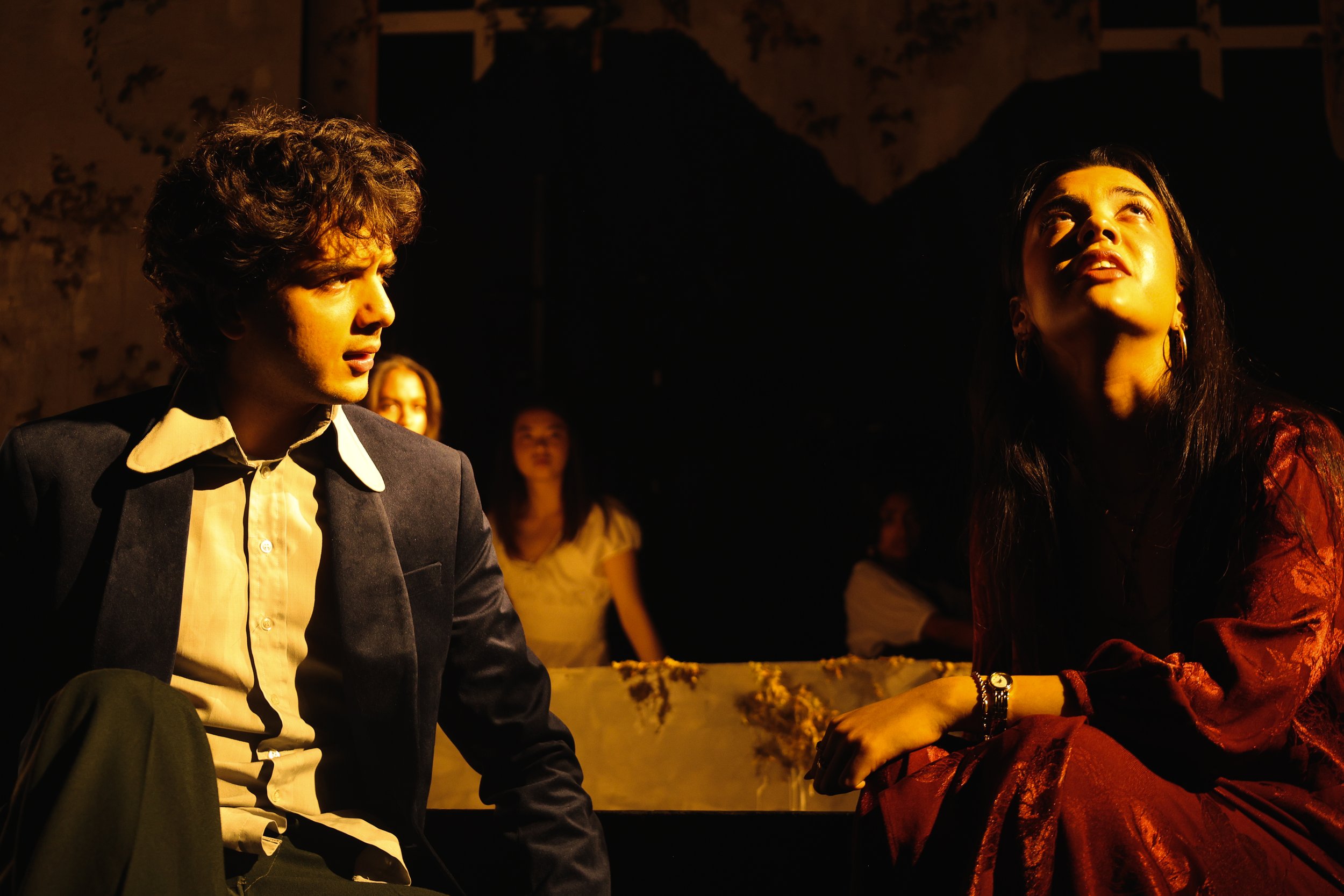
Mina Strevens gave an outstanding performance in the title role. Her Medea combined raw anguish with terrifying resolve, the pain in her voice constantly shadowed by an iron determination to annihilate Jason’s happiness. Driven into exile by the vindictive Creon and left with virtually no agency within Greek society, she becomes both monstrous and tragically understandable. Strevens brought such intensity to the role that Lady Macbeth seemed positively restrained by comparison.
She was strongly matched by Will Atiomo’s smooth, self-justifying Jason, a man attempting to persuade both Medea and himself that his betrayal is somehow practical, even beneficial. Medea sees through him completely. His new marriage may be politically expedient, but for her it becomes the trigger for catastrophe.
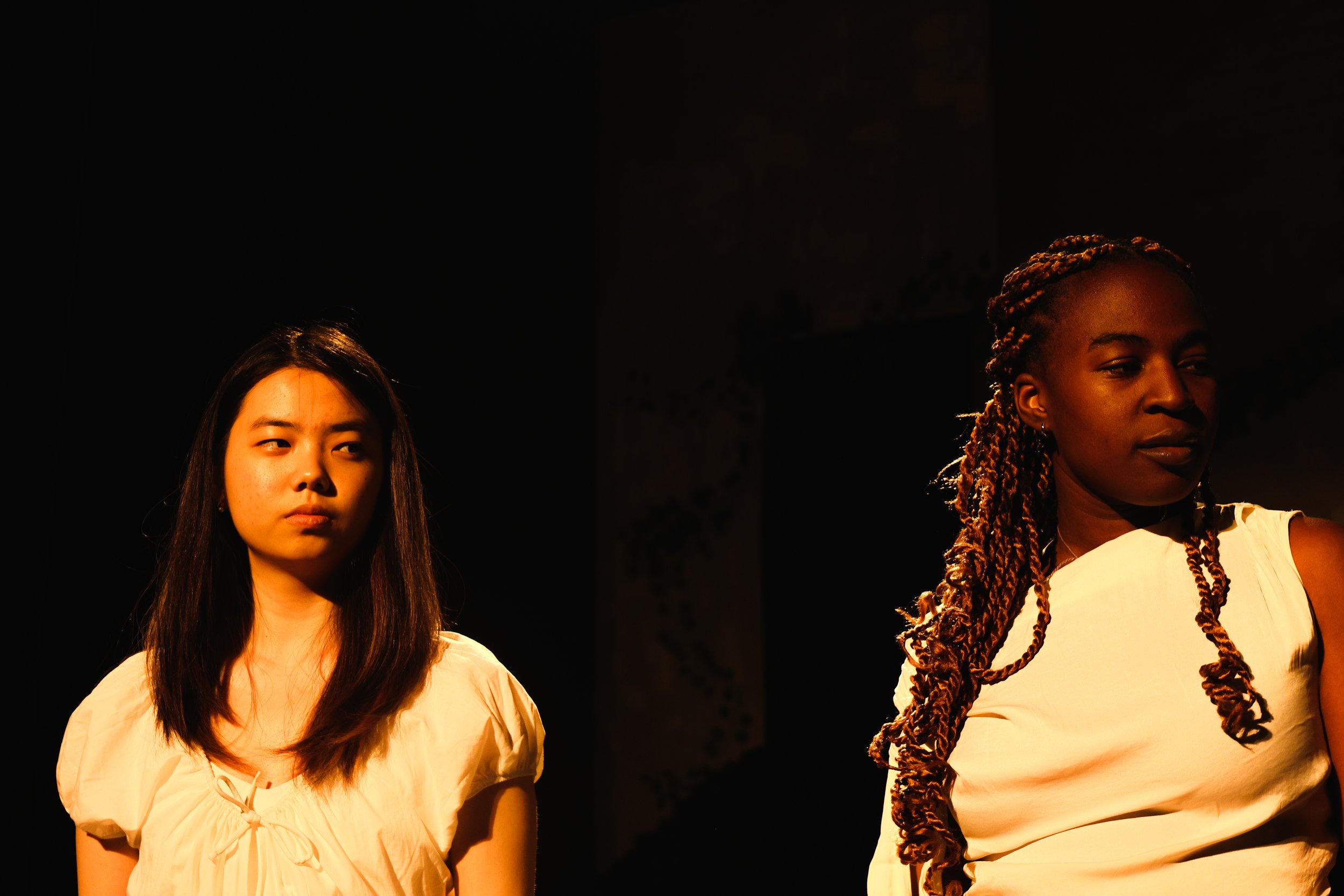
Indira Mehta’s measured and compassionate Nurse set the emotional tone perfectly in the opening monologue, while the smaller roles were all finely judged. Particularly effective was the four-member chorus — the women of Corinth — dressed in vestal white and moving with ritualistic fluidity through the action.
Two further elements elevated this production far beyond the expectations of student theatre. Rich Mandal’s live band and original score created a haunting musical landscape that moved between lyrical warmth and unsettling dissonance, lending the play an almost global resonance. Equally striking was the visual design. Sadie Zadeng’s fractured doll’s-house set, illuminated by Yusaf Hassan’s atmospheric lighting, became a chilling metaphor for the splintering of Medea’s family and the doom hanging over her children.
This was an intelligent and beautifully balanced production: respectful of Euripides while confidently weaving in contemporary themes and imagery. Ancient tragedy can sometimes feel remote. Here, it felt disturbingly immediate.
Photo credit: Aya Krstonosic