Schumann, Finzi and more at Jesus College
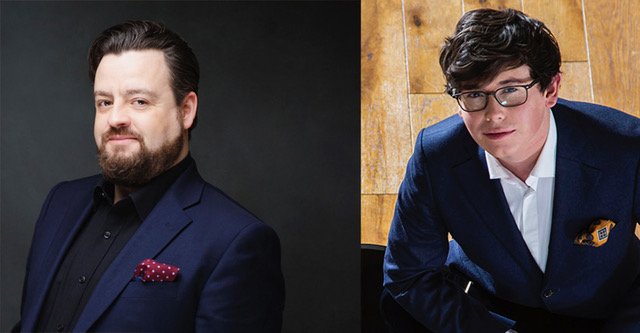
Ben Johnson Tenor and Martin James Barlett Piano
Jesus College’ cloistered chapel is the perfect place for a concert on a hot summer’s evening. Solid stone the ancient Church of the Sisters of St. Radegund wraps cool air around the audience, austere yet intimate.
And the perfect performers for this 13th century space were Ben Johnson the world-renowned tenor and the boyish brilliant Martin James Bartlett, awarded every garland in the arena – and some you haven’t heard of - Prix Serdang for instance gave him their inaugural prize. Still young he has musical joie de vivre and an apparently careless approach to his instrument which conveys confidence to the audience. Angst and tension are clearly not his style yet his piano technique is flawless, even breathtaking. Whilst the more experienced Ben Johnson who I have personally witnessed turn his wonderful voice to any genre,includng a bawdy ballad for Sean Shiba. Bartlett still has all to play for in every sense shown by a delightful mastery over the material last night as he accompanied Ben – and dazzled us intermittently with his virtuoso solo performance.
As in the Hymn Tune on Song 13 by Orlando Gibbon as interpreted by Ralph Vaughn Williams, truly a heavenly rendition of a (possibly occluded song) from centuries ago, it took us into a realm of early evening joy.
But that is to rush in over the star of the show Robert Schumann. Just to glance at the numerals of his short life (1810- 1856) brings home the tragedy of his early death. Despite depression and sometimes incarceration in asylums, his was a life lightened by his love for the talented musician and composer, Clara who bore him so many children.
Writers for children are successful insofar as they bring their own childhoods. to their stories. Might it be the same with music? Schumann did have a large family but the music.Kinderszenen Op 15 recalls a time in his own life, lost to him in his turbulent adulthood. After half a bar the sublime beauty of this precious piece falls on the audience, and when performed initially by Martin and then Ben creates an entire world of delight, especially in Night Song and In a Foreign Land the pathos and nostalgia sweeps through the work whilst Silence creates what must have been an oasis of happiness in a troubled world.
Gerald Finzi ‘s music here is set to some poems of Thomas Hardy. Almost every single. one is about Hardy’s relationship with Emma, the woman who features in so many of his poems – even after her death, “Woman much loved how you call to me, call to me”, but Thomas Hardy’s marriage was often wrecked by conflict with her. Not very surprising, he was almost tricked into marrying her, a spinster much older than he was led to believe. Finzl captures the ambivalence that spoiled their lives together.
“To feel I might have kissed- Loved as true- Otherwhere , nor Mine have missed, My life through, Had I never wandered near her”
Yet in Budmoth Dears,( the lasses of his youth) Ben’s strong voice gave us the gaiety of country life in Hardy’s beloved Dorset.The “dears’ are older now “ Do they miss us much, I wonder Now that war has swept us sunder?’
Unsurprisingly Schuman’s work triumphs but Finzi has his own way with nostalgia and regret.