THE NASH ENSEMBLE AT THE UNION
Could there be more of a contrast? The gloomy interior of the Union Debating Chamber with its wall-to wall earnest black-and white photographs – against the bright light -up -our- day uplifting music of the Nash Ensemble? The legendary quintet now resident at the Wigmore Hall tucked away in stylish Marylebone flourished in an environment where the stuffed benched seating reminded me of school.
Yet that was a mistaken impression. Ben Johnson the Festival Director told us the musicians loved practising there. They are a group with so much energy suffused with vitality, they even smile as they’re playing.
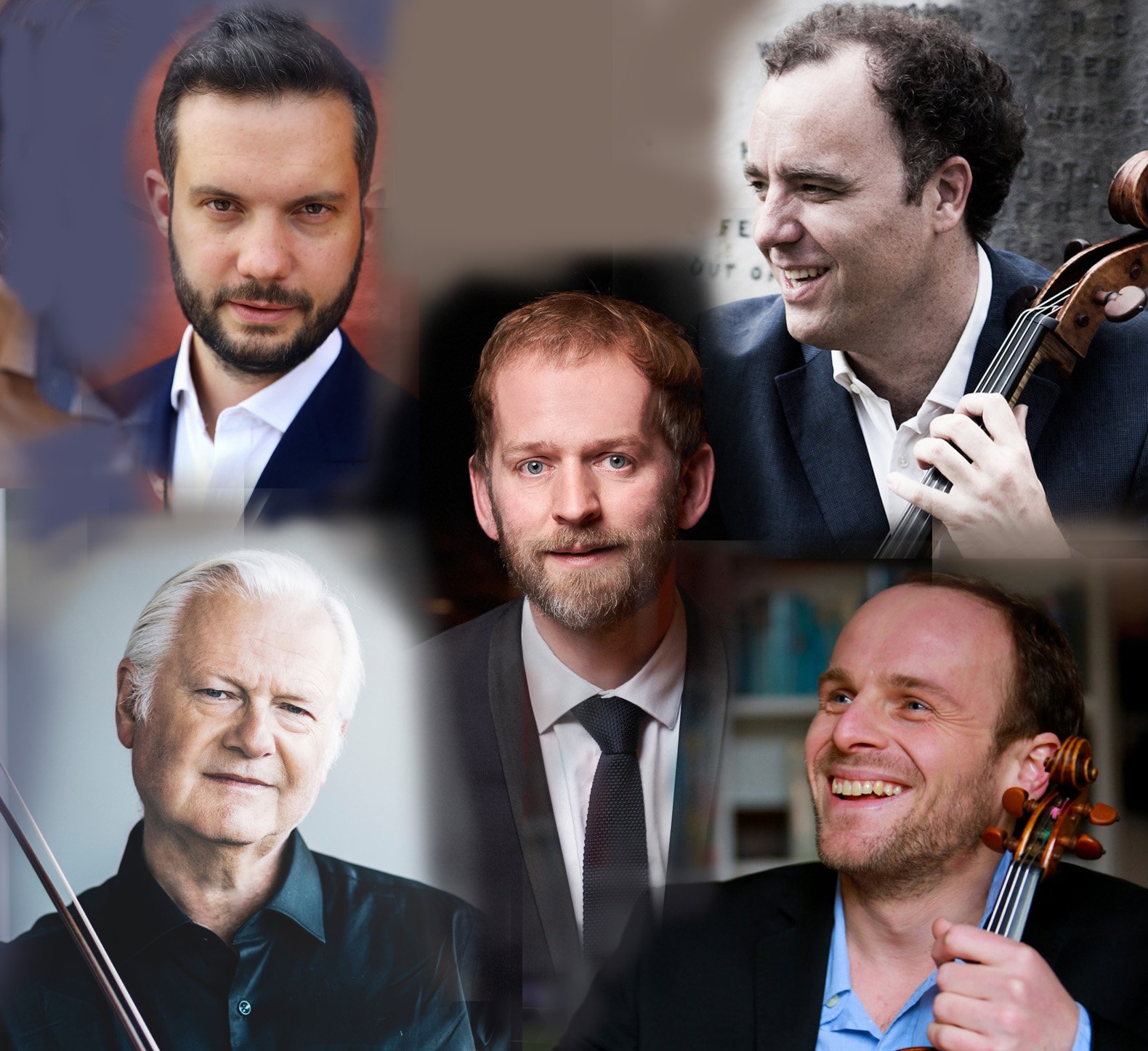
I last saw Alasdair Beaton the hard -working pianist in the grandeur of Trinity Concert Hall (yes, they do have one presided over by the giant portrait of Queen Elizbeth 1) it was great but this evening his performance was muscular – turbo-charged even - in the Dvorak Piano Quintet . A fabulous Benjamin Nabarro on violin was lyrical alongside exquisite technique from Jonahan Stone. Lars Anders Tomter looked delighted to be playing the viola and Adrian Brendel on cello emerged star-like as he rendered its central lyrical theme with deep feeling. This piece was the core of the concert, a chaotic but controlled piece with so much scope it entertains and inspires at every turn.
How do they do it? Communication between players has always fascinated me, after a lifetime devotion to the Endellion String Quartet. As a permanent group it’s easier to see how a reliable rapport helps the instrumentalists to know when to come in – and when to stop. The precision which the Nash displayed tonight made me feel they could turn on a sixpence, massive noise and then instant silence, like a highly trained set of race-horses they instinctively turn for the cue, a signal the rest of us cannot even discern. Magic.
The concert began with a quasi-comic piece from Beethoven known as the Kaladu variations but entitled ‘the sisters from Prague’ and it was actually light and amusing, playful and often - dare one say it of the Master - fun.
Then a Hayden piece also suffused with humour and a climactic scherzo from a rhythm akin to dance music combined to make a pleasant start.
But it was the Dvorak which captivated everyone, I heard, I thought strains of Rusalka his lyrical opera, its Slavic tones make for a wonderfully wistful ambience - and music to remember.
The Nash Ensemble have been going for sixty years – not the same players, it’s a Collective. But at this rate they’ll be powering on to another septarian birthday.