REVEALING (IN)VISIBLE TIMES AT THE HEONG GALLERY

Cleaning mops, dye, fittings.
The ever -inventive Heong Gallery, now a feature on the Cambridge art landscape presents a double exhibition. It features Brazilian-born artist Alexandre da Cunha alongside Chilean artist Francisca Aninat, Valentina Gajardo has put it together with cool precision. The themes are quirkily significant. Using the meidum of ,textiles, and re-configured found objects, the exhibition explores the lives lived by many marginalised workers in the hidden world of service to a more affluent Uber-class. Deeply mundane quotidian .objects, are deployed to render the experience of cohorts of workers globally.The entire exhibition explores their unsung drudgery - examines time itself and makes for. a moving experience for the viewer
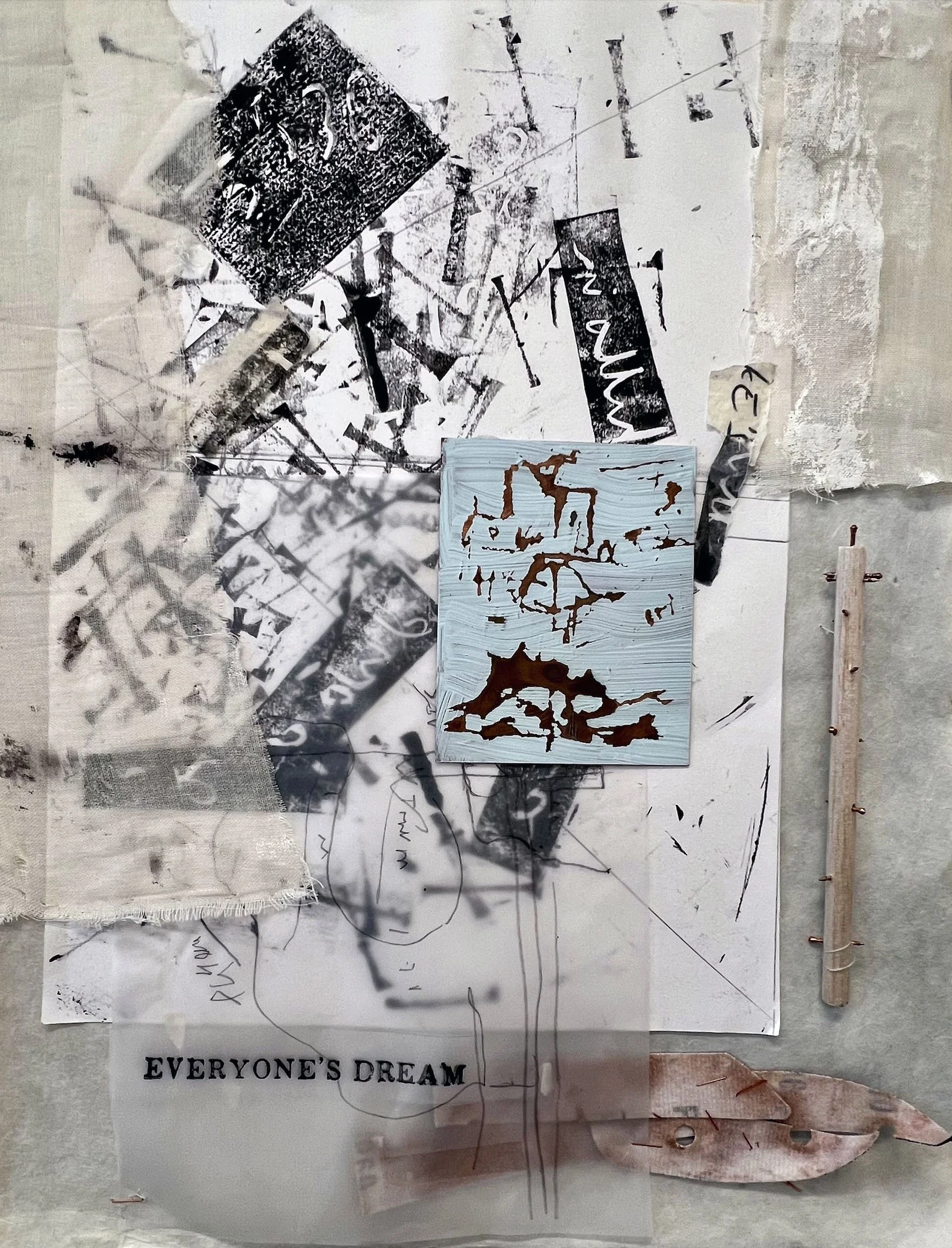
Francisca Aninat_ Everyone's Dream.
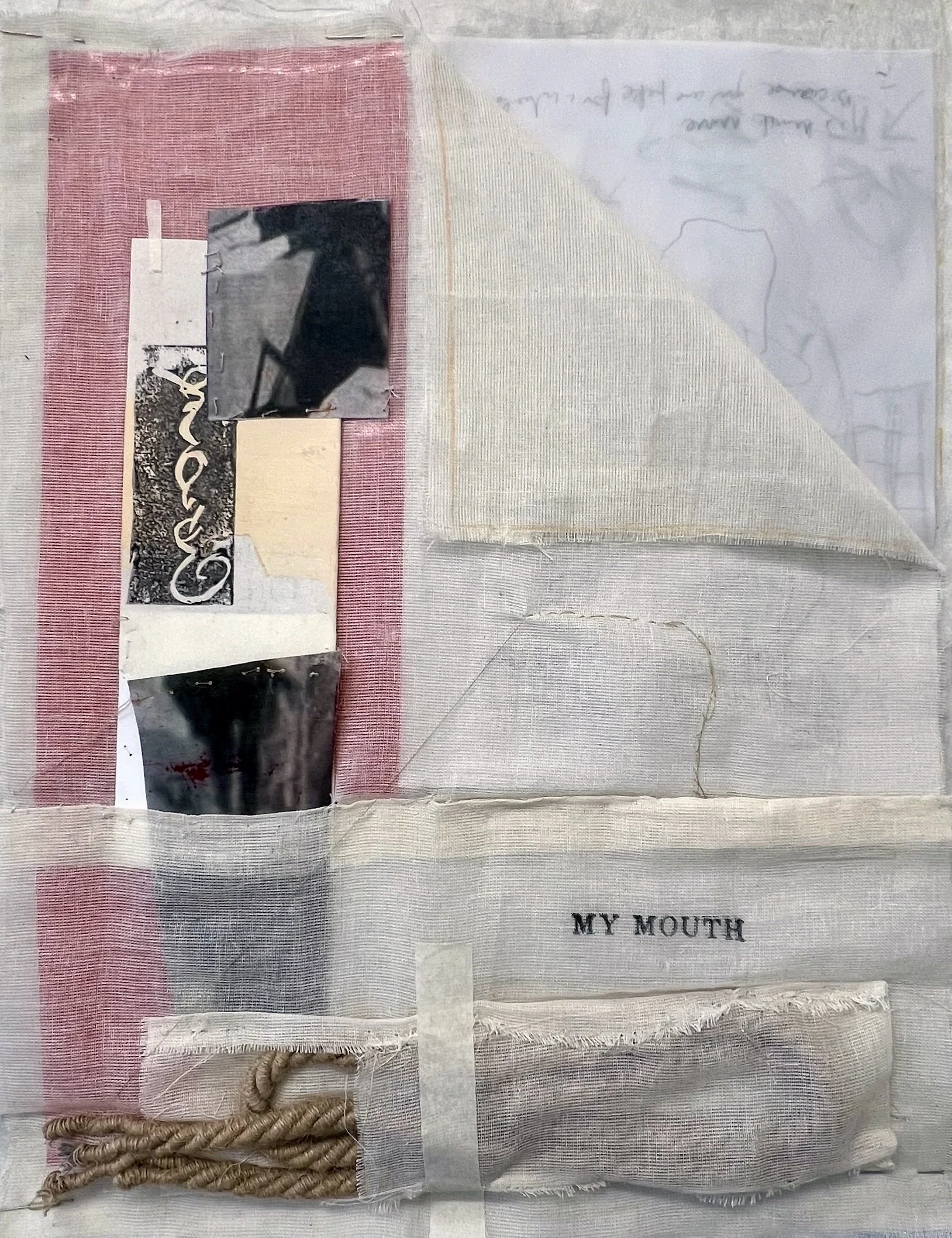
Aninat Collage Francisca Aninat. My Mouth, 2025Mixed media on canvas created in collaboration with patients at Addenbrooke’s Hospital, Cambridge
Although the exhibits do nothing to hide their everyday origins, these works of art are nevertheless compelling and hugely distinctive. Francisca Aninat’s work is linked to the health services both here and in her native Chile. And they address the problem of time, time wasted or time revealed. certainly the concept of the Waiting Room full of anxiety, apprehension and often pain somehow emerges from her materials. Addenbrooke’s hospital patients ( already you begin to question the familiar word) have contributed to the project. The pieces are so authentic, so planted firmly in the over-looked and under-valued background toil which makes up the vast majority of endless hours in hospital. And honours it.
Glamorous mop heads, colourful and celebratory ropes are the constants of Alexandre da Cunha’s parallel work in the exhibition. Splendidly displayed these objets trouvés in the hands of this artist somehow cling to their origins whilst warming to their Pauline glorification. The result is a sequence of semi-familiar exhibits which have not lost their past but assert themselves in the space of the Heong.
Both unmistakably compelling.