
SPITFIRE GIRLS - ARTS THEATRE
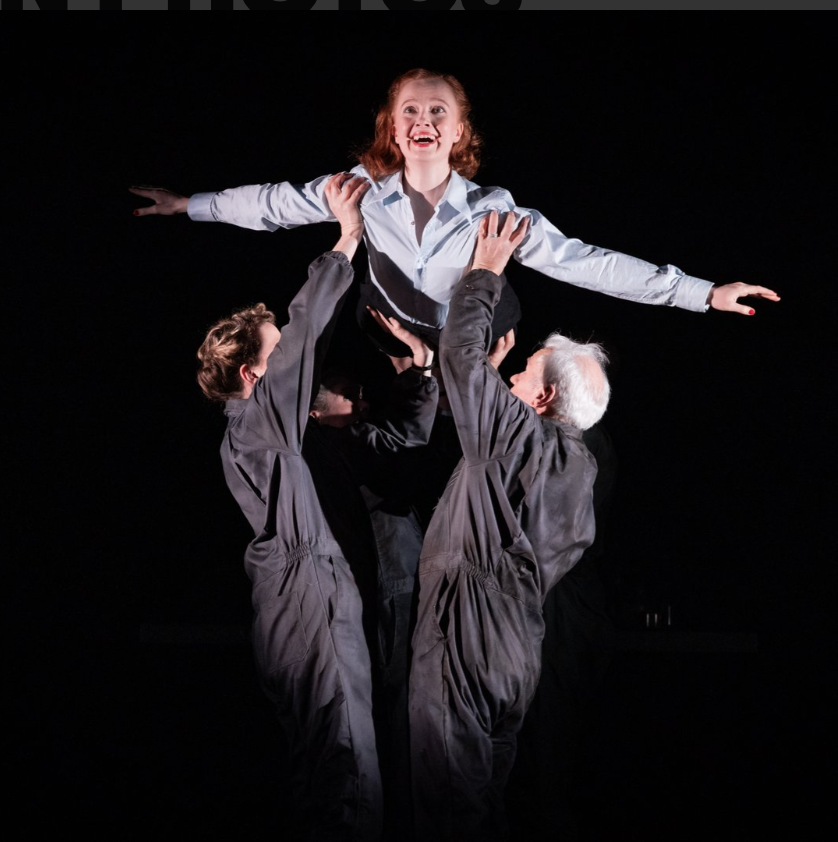
Is it a bird? Is it a plane? Is it a play?” Spitfire Girls looks up, looks back—and ultimately struggles to land its ambitions.
Framed as a memory piece, the play sets out to tell an epic story with just five actors. Its focus is the wartime Air Transport Auxiliary (ATA), that largely overlooked civilian unit whose pilots ferried aircraft—including the iconic Spitfire—between bases. Many of those pilots were women, and here we follow two of them: sisters Bett and Dorothy, played by Katherine Senior (who also wrote the piece) and Hannah Morrison.
Defying their disapproving father (Jack Hulland, doubling in several roles), the sisters join the ATA to “do their bit.” Bett is the older, more restrained figure, a surrogate parent with limited prospects; Dorothy—“Dot”—is impulsive, daring, and intoxicated by flight. Though she can barely drive, she quickly becomes a fearless pilot, seduced by the freedom of the skies. Inevitably, tensions arise—not least over Tom (Paul Brown), an RAF airman who becomes the object of both sisters’ affections.
The narrative moves between two time frames—1943–45 and 1959. In the latter, Bett runs a pub and keeps a dog named Dorothy. It is New Year’s Eve, and the suggestion is that Dot has returned—perhaps literally, perhaps as memory, perhaps as something more elusive. There is unfinished business between the sisters, and a secret waiting to be disclosed.
There are promising ingredients here: a rich historical backdrop, sisterly conflict, romance, regret, and the lingering presence of the past. Add in bursts of Lindy Hop and a hint of Ella Fitzgerald, and the production seems poised to soar.
But it never quite does.
There are flashes of genuine emotional intensity—one or two scenes briefly lift the piece into something affecting—but overall the storytelling feels curiously weightless. The risks faced by these women, both in leaving home and in flying wartime missions, are underplayed. What should feel dangerous, even reckless, instead comes across as oddly effortless.
The central relationships fail to fully convince. The love triangle lacks emotional urgency, and the tensions between Bett and Dot—so crucial to the drama—are not developed with sufficient depth. Too many scenes unfold at a languid pace, the dialogue often missing opportunities for wit or surprise, and key plot developments arrive with a predictability that drains them of impact.
Visually, the production does little to compensate. The minimalist staging—scattered period furniture, black drapes, and occasional projected clouds—creates an atmosphere that feels less evocative than underpowered. There are moments of visual flair (not least Dot’s striking red dress during a dance sequence), but they are fleeting.
The story of the women of the ATA is a compelling and important one, rich with courage, danger, and sacrifice. It deserves a telling that matches its scale and significance. Spitfire Girls, for all its good intentions, never quite achieves that altitude.
Photography by Robling Photography