LOSS OF POWER - CORPUS PLAYROOM
Loss of Power, a powerful new play by local writer Sean Lang, takes us to middle England in 1970, as Harold Wilson's Labour government gives way to Edward Heath's Conservatives. It was the time of bolshy unions, the IRA and power cuts. But behind the respectable façade of an Oxfordshire household lies a secret that threatens to destroy a family and a political career.
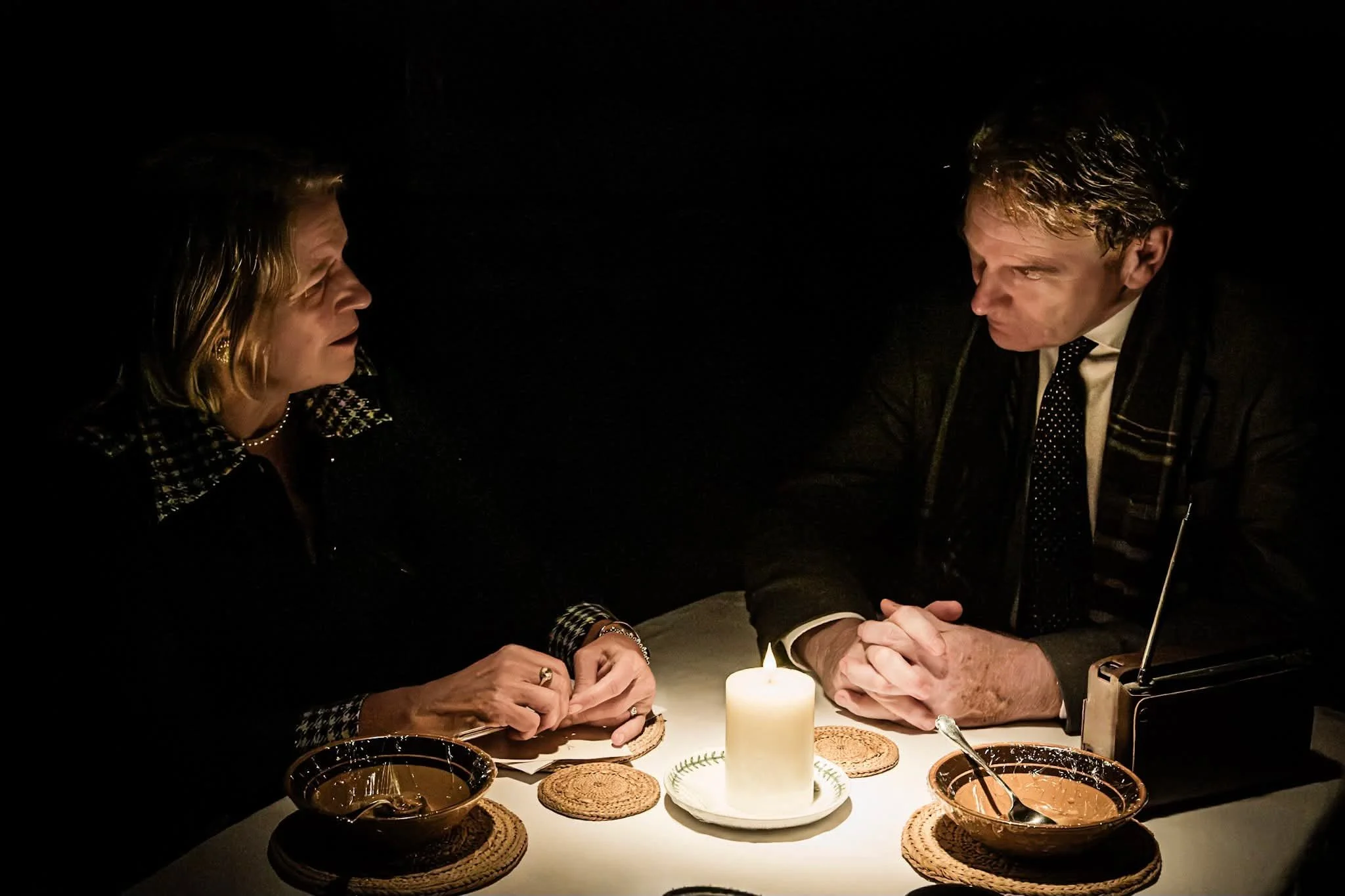
Roger Hatherleigh (played by Lang himself) is a prospective Conservative parliamentary candidate, firmly on the liberal wing of his party. He opposes capital punishment, supports Britain's entry into the Common Market and represents a recognisable strand of moderate, middle-class Conservatism.
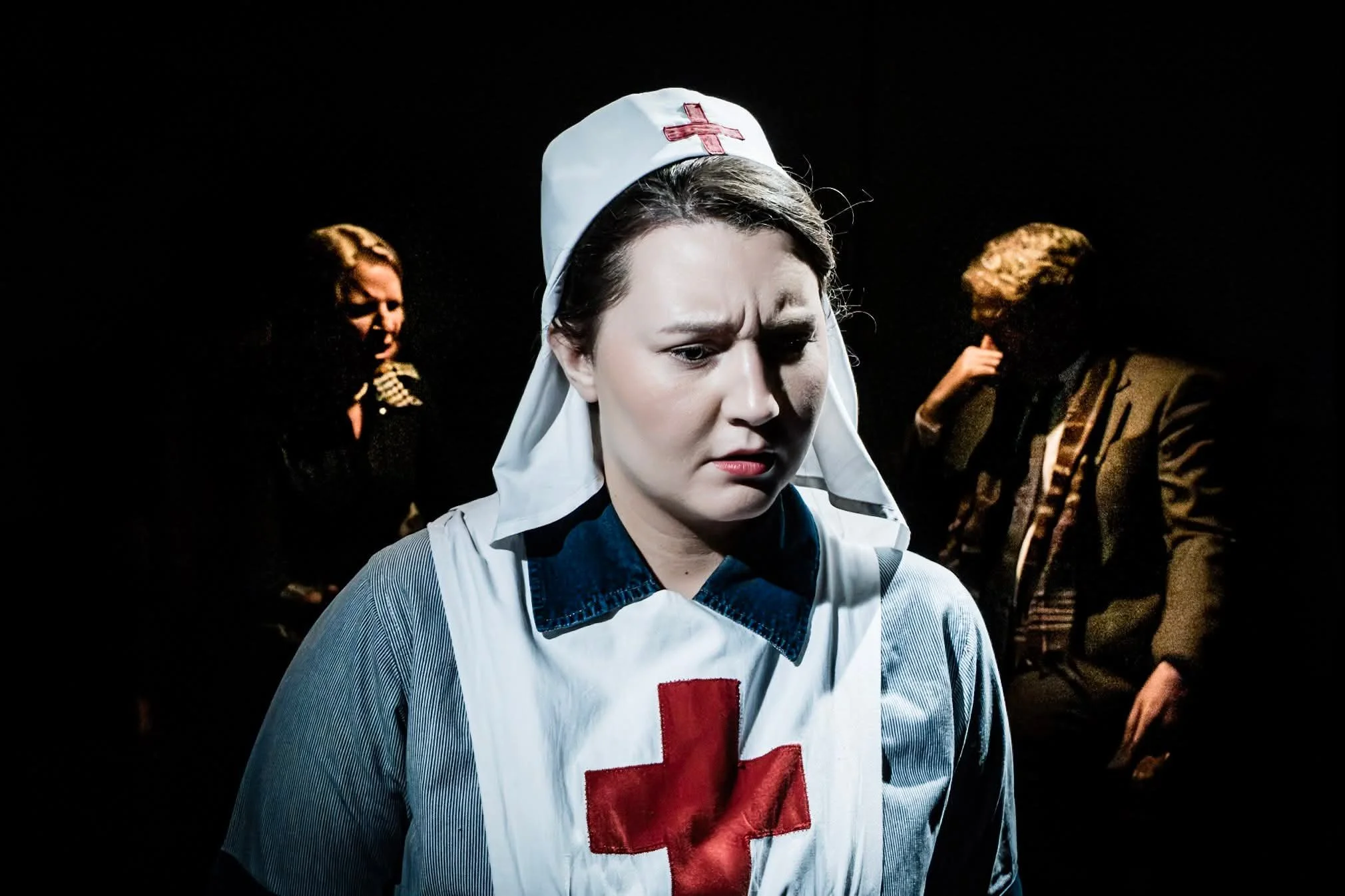
His wife, Liesl (Kirsty Smith), is a rather different proposition. German-born, she came to Britain shortly after the war, having met Roger when he was serving as an intelligence officer with the British Army of occupation. He had interviewed her over questions about her possible Nazi connections. She told him that she had worked as a nurse in a children's hospital in Hamburg. They fell in love, married and settled into a comfortable English life.
Their daughter Sally (Imogen Nancekievill) is a bright young woman studying for her A-levels. Liesl is determined that she should become a doctor rather than a nurse. Why? Because nurses have to take orders. It is one of several apparently incidental remarks that gradually acquire a much darker significance.
Liesl is very much the formidable housewife and stalwart of the local Conservative club, but her political opinions are considerably more hard-line than her husband's. She favours hanging and flogging, has little patience with liberal attitudes towards the IRA and is contemptuous of what she regards as weakness. Then comes the revelation that turns the household upside down.
The West German authorities are seeking Liesl as a suspected Nazi war criminal. Her past may not have been spent nursing children in Hamburg at all, but at Ravensbrück, the notorious women's concentration camp, where she is accused of involvement in cruel medical experiments on prisoners.
What does Roger really know about the woman he married? Has he been deceived throughout their marriage? What will the revelations mean for his political ambitions? And, perhaps most importantly, what will they do to Sally?
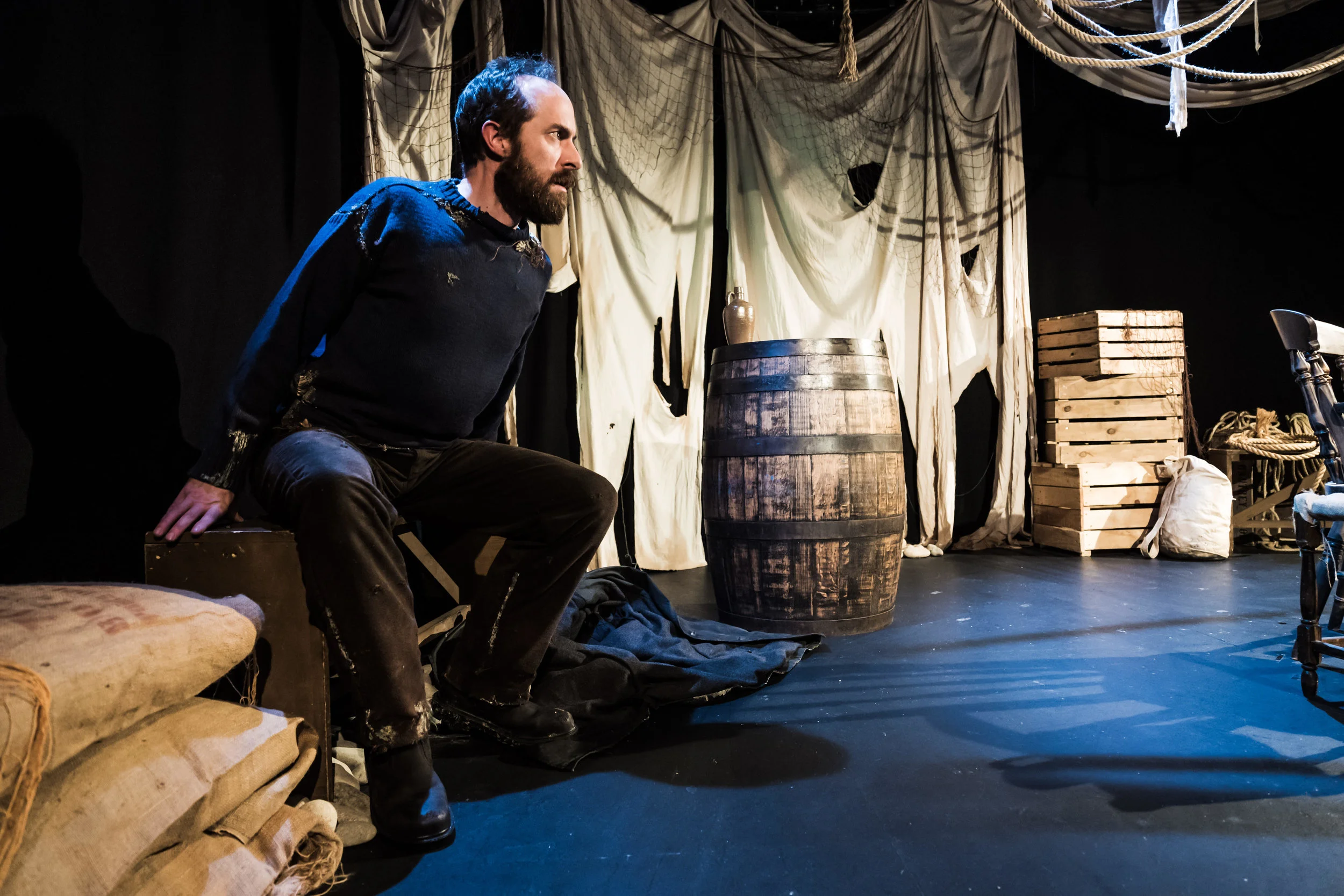
Lang unfolds the story through scenes set in the family home and flashbacks to wartime Germany and the immediate post-war years, where we encounter the younger Roger and Liesl. There are some genuinely heart-stopping moments, and much of the writing is extremely effective. The play's central dilemma is compelling: can we ever put our past misdeeds behind us, or must they inevitably return to haunt us? Can one person really be two people?
These may not be entirely new dramatic questions, but Lang gives them particular force by placing them within the respectable world of middle England, with its political ambitions, domestic conventions and carefully maintained appearances.
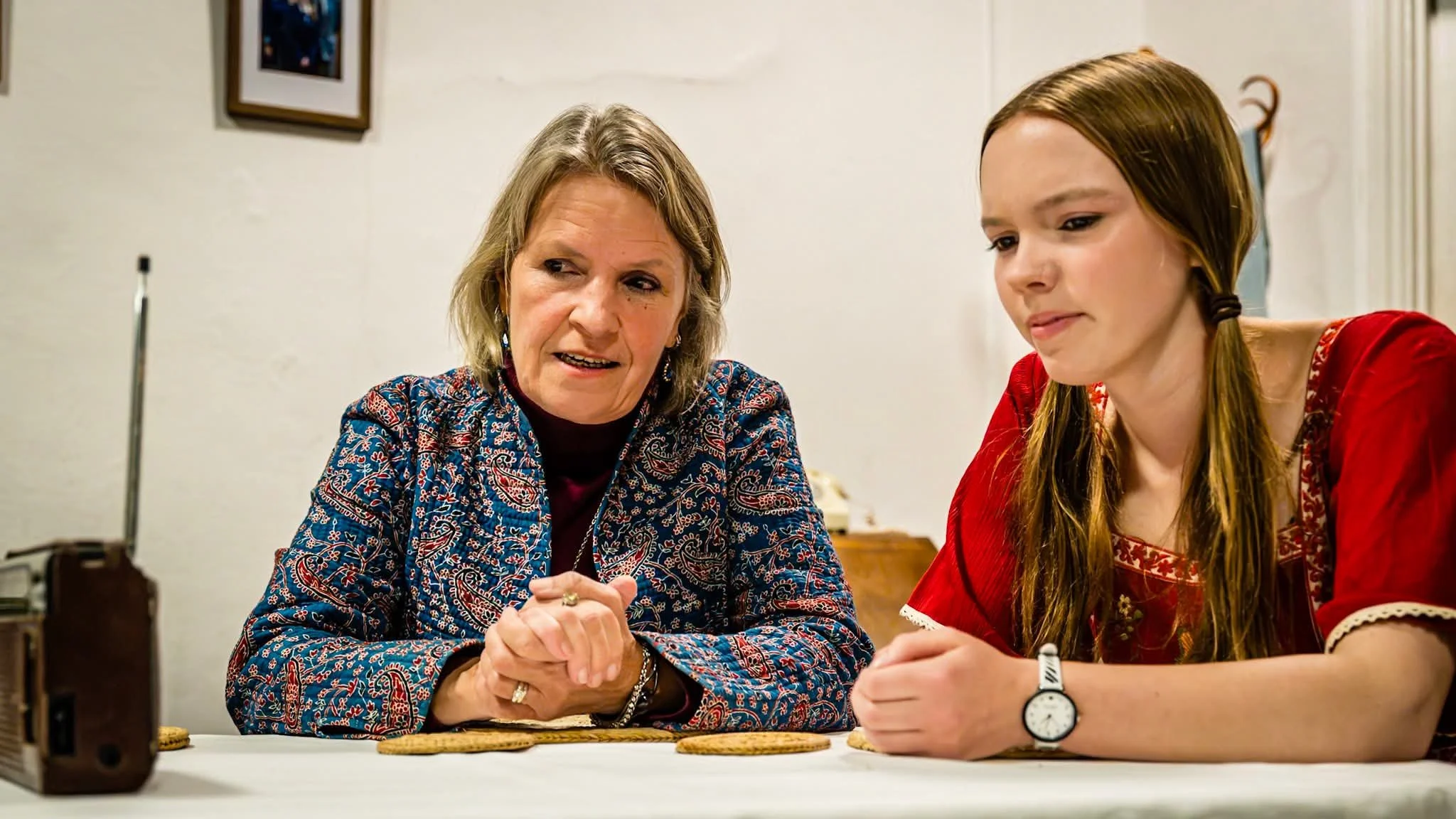
Kirsty Smith is particularly impressive as Liesl. Hers is a demanding role, requiring her to move between the conventional wife and mother of the 1970s and a woman whose darker past has never entirely disappeared. Smith brings considerable conviction to both sides of the character. Imogen Nancekievill is equally convincing as Sally, while Chris Jeffery and Becky Bloom give strong performances as the younger Roger and Liesl. The acting throughout is of a high standard.
My principal reservation is the length. The play loses some of its momentum during its final twenty minutes, and judicious cutting would make the dramatic impact considerably stronger. There are moments when the revelations and confrontations have already done their work, yet the action continues.
There are directorial question marks, too. The production has a rather amateur-theatre penchant for scene-changing blackouts, too often without sufficiently strong covering music or sound. Instead of carrying the tension across the transition, these pauses allow it to drain away. In a play built on revelations and mounting unease, the changes need to become part of the dramatic rhythm rather than interrupt it.
The writing also leans too heavily on telephone calls to move the narrative forward. Too many one-sided conversations are required to explain developments that might be more compellingly revealed through encounters between the characters. The device is useful in moderation, but repeated here it begins to feel like exposition rather than drama. A blue pencil, applied with care, could turn a very good piece of theatre into something even more impressive.
What makes Loss of Power particularly rewarding is that it refuses to leave its audience comfortably detached. We are constantly being asked to judge, to reconsider and to take sides. The past intrudes upon the present, political conviction collides with personal loyalty, and the apparently secure foundations of family life begin to crumble.
This is precisely the sort of challenging, ambitious new writing that local theatre should be encouraging. Sean Lang has created a gripping domestic and political drama, full of questions that continue to resonate long after the curtain falls. There is a really fine play here, bursting to get out and not suffer any loss of power.
PHOTO CREDIT: PAUL ASHLEY