CITY OF CAMBRIDGE SYMPHONY ORCHESTRA
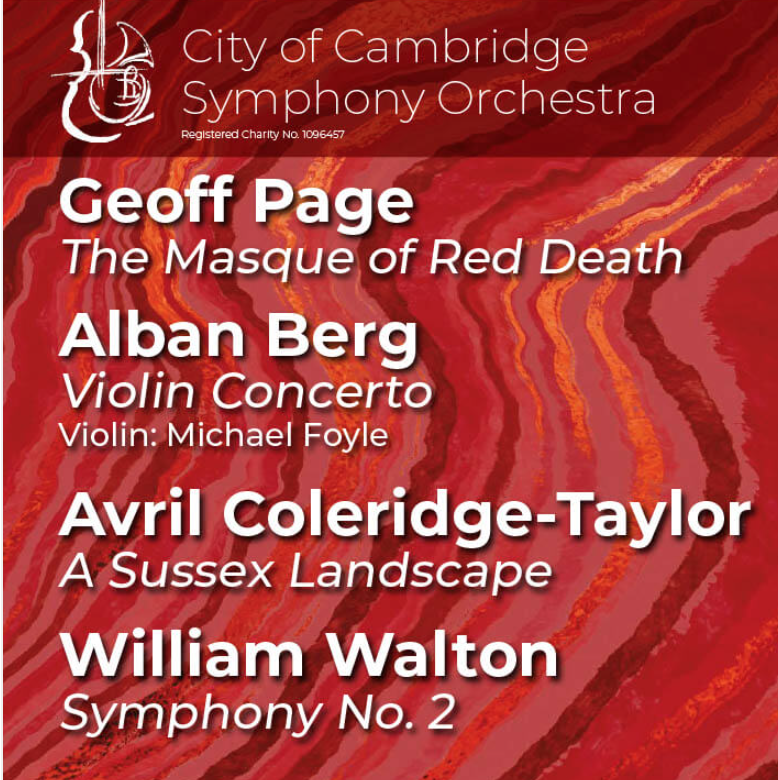
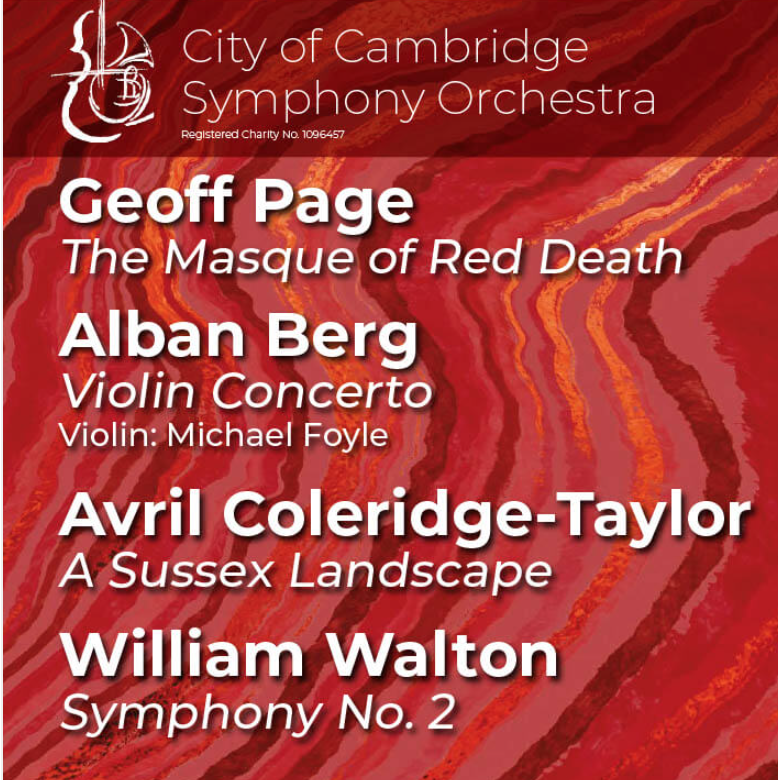
Thank goodness for a warm concert hall. A cold harsh wind was blowing down West Road and this musical sanctuary was welcome in more ways than one. The theme of cold and darkness was apt for a surprisingly bold and chilly programme presented by the City of Cambridge Symphony Orchestra (CCSO). First up, a world premiere: ‘The Masque of the Red Death’ was by local composer Geoff Page. The title offers little in the way of sunny uplands. The programmatic work is indeed a musical telling of a short and dastardly story by Edgar Allen Poe. Page, a local teacher and viola player in the band, is clearly a musician of immense talent. Scored for huge orchestra, the CCSO were stretched in every department to produce a rich, and compelling auditory experience. A catchy four-note motif played around the instruments forever changing the mood from dark to darker. Brassy outbursts scared the pants off this reviewer but there were some lovely lyrical passages too for the strings. The CCSO were at their very best producing a gorgeously resonant sound under the fluid baton of Robert Hodge. Page proved that tonality is far from dead, and this powerful narrative work deserves to be heard over again. One mini grouse: the diffident composer got a rather offhand invitation to take a special bow; blink and you’d miss it. He deserves more of an ovation for producing such a satisfying new piece.
Next up was an offering that few would call a crowd pleaser. Alban Berg’s Violin Concerto, wrought from the fires of the Second Viennese School, is nevertheless one of that atonal school’s more accessible works. Soloist Michael Foyle dressed in a casual grey suit looking more middle manager than maestro, produced a lovely, undemonstrative sound. The orchestra was more than up for creating Berg’s ever-shifting sound world. The concerto strains to become what it surely wants to be, a lush late romantic work. But the 12-tone formula is there despite a very welcome and extended homage to Bach. Foyle was super relaxed in his playing and charmingly, often turned to face the upper strings giving a sense of collaborative ensemble rather than the usual musical punch up between band and fiddler.
After the interval, another work far less known: ‘Sussex Landscape’ by the largely (but unjustly) forgotten Avril Coleridge-Taylor. Despite the title, this is no bucolic musing on the High Weald or Seven Sisters coastal path. Instead, Coleridge-Taylor (daughter of the more famous father), wrote the piece in 1940 as a sad musing on the brutality and futility of war. A very apt piece for us today. It is rich in harmony, sweeping themes, and like the Page piece, brimming with sensuous orchestral colour. This is definitely a piece to hear again; it should be there in the main repertoire and so woolly hats off to CCSO to bring it alive.
The final work was Walton’s Second Symphony. Far less known than the edgy First, this work is more difficult to like. The orchestra was fired up in the jazz-infused first movement packed with catchy rhythms and breathtaking orchestrations. Walton was so good at that. The second and third movements are less successful, and I did find my attention wandering. They are huge in burly gestures but lacking in substance. That said, the CCSO gave the symphony a great outing with strength in every section. It’s not a cheery symphony but it was one to make one ready for the bitter winds awaiting outside.