A SOLDIER'S TALE
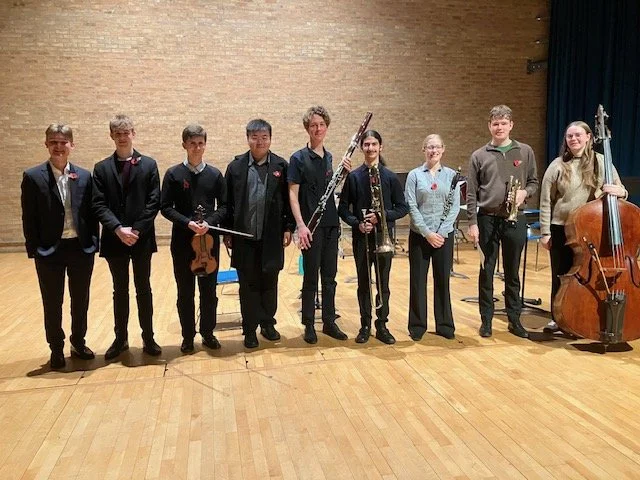
HUGO WILLIAMSON, JUDE ELLACOTT, JAMES MARSHALL, ISAAC CHAN (CONDUCTOR), KIERAN HOLLIS, ISAAC SCHEER, JANES HAMMOND, ED HINCHLIFF, ANNABEL BENISTON,
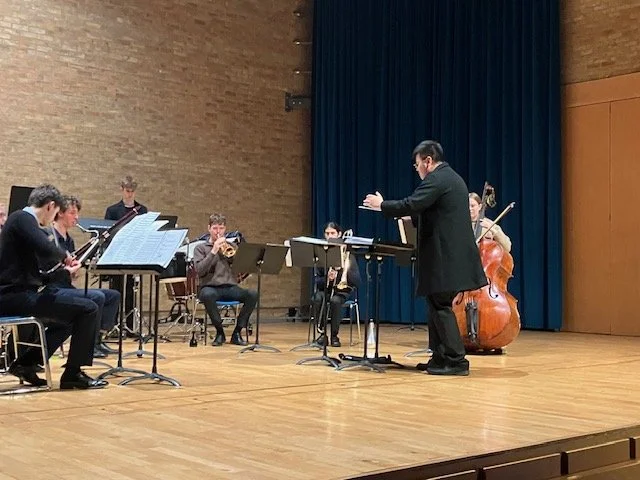
Regular readers of the Critique will be fed up of me saying how lucky we are to live in Cambridge with its astonishing offers of art and music. Well, after today’s lunchtime concert at West Road I have to say it again. And again. The programme had one work: Stravinsky’s ‘A Soldier’s Tale’. Written in 1918, it is scored for septet and narrator. It tells a dark fairy tale of a soldier coming home from war who is tempted by the Devil to make a Faustian pact. Offered untold wealth, the devilish traveller doesn’t warn our soldier boy that his soul is in jeopardy. Stravinsky tells his tale via 13 (significant?) short movements each presenting a wealth of audacious scoring: bassoon, trumpet, trombone provide the brassy discords, clarinet the moments of grace and innocence, a double bass pounding out its rhythms and percussion thrilling us with its offbeat marches and sinister pulses. Ed Hinchliff provided a perfect blast on the trumpet which has to play thrilling trills and madcap underscoring. The music still astonishes even though well past its centenary.
Central to the work is the violin which acts as the soldier’s instrument (the one he sells to Old Nick) and a frenetic, nightmarish waking dream. This work with its scored narration (akin to Walton’s Façade only years before that was written) is devilishly hard to play, or at least sounds it. Cross rhythms, bitter syncopations, sudden stops and musical jerks constantly challenge and delight the ear. The band under the baton of Isaac Chan were in top form. Chan is a prolific and wonderful Cambridge music maker who kept the players tightly bound to the Russian composer’s complex score. Special mention here for the violinist James Marshall whose fiddling while the soldier’s roaming was burning was outstanding. Hugo Williamson was also first rate as the narrator. He captured perfectly the shifting moods between innocence and devilish guile while keeping in perfect time with the catchy, nerve jangling score. This was all music making at its finest. And in a Cambridge lunch hour. What could be better?
Photos: Mike Levy